Your No-Sweat Guide to Reading Currency Exchange Charts
Planning a trip abroad or eyeing something special from an international store? You've probably bumped into currency exchange rates and those charts that look a bit like a squiggly line test. Don't let them intimidate you! While they might appear complicated at first glance, reading currency exchange charts is actually a pretty straightforward skill once you know what you're looking for. We're going to demystify all those numbers and lines, turning you into a mini-expert in no time, so you can make smarter decisions with your cash, whether you're traveling or shopping.
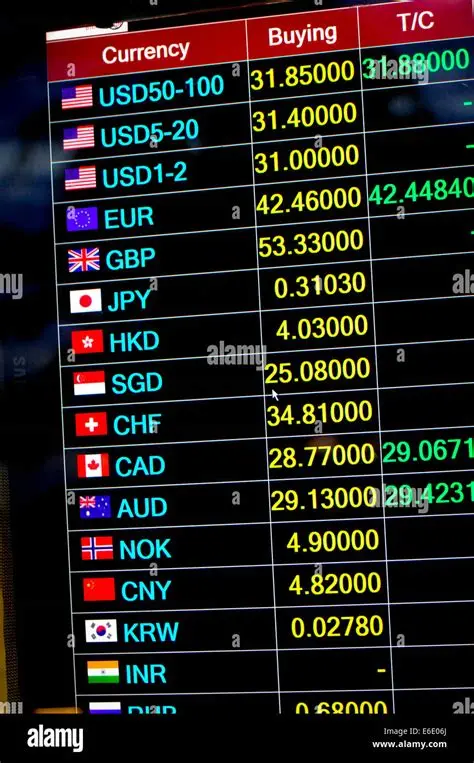 Source wealthview.co.in
Understanding Different Chart Types & Their Benefits
When you're diving into the world of currency exchange charts, you'll quickly notice that they come in a few different flavors. Each type offers a unique way to visualize price movements, helping you make sense of the market's ups and downs. Understanding these differences is super important for anyone looking to trade or invest effectively. Let’s break down the main ones, so you can pick the best tool for your analytical needs.
One of the most straightforward chart types you'll encounter is the line chart. It’s incredibly simple, connecting the closing prices of a currency pair over a specific period with a continuous line. This gives you a clear and uncluttered view of the overall trend, making it easy to spot general direction without getting bogged down in too much detail. It's a fantastic starting point for beginners to grasp the basics of price movement.
However, line charts don't provide all the information you might need. That's where bar charts come in handy. A bar chart, for each period, displays the opening price, the closing price, and the highest and lowest prices reached during that period. This additional detail gives you a much richer picture of price action within each timeframe, showing volatility and range. You can see how prices fluctuate from open to close.
Then, we have the superstar of currency charts: the candlestick chart. These charts originated in Japan and are incredibly popular among traders because they offer a visual feast of information. Each "candlestick" represents a specific time period, showing the opening price, closing price, high, and low, similar to a bar chart. However, they do it in a very intuitive, colorful way.
The "body" of the candlestick shows the range between the open and close, and the "wicks" or "shadows" extending above and below represent the high and low prices. The color of the body typically indicates whether the closing price was higher (often green or white) or lower (often red or black) than the opening price. This visual difference immediately tells you whether buyers or sellers were in control during that period, offering deep insights into market sentiment and momentum at a glance. Many experienced traders rely heavily on candlestick patterns to predict future price movements.
Choosing the right chart type often depends on your trading style and how much detail you want to see. Many traders start with line charts for general trend analysis and then switch to candlestick charts for in-depth analysis of price action and potential entry/exit points. Don't be afraid to experiment with them on your trading platform to see which one resonates best with your analytical approach.
| Chart Type | Information Provided | Visual Complexity | Common Use |
|---|---|---|---|
| Line Chart | Only closing prices, connecting points over time. | Very Low | Identifying overall trends, macro analysis. |
| Bar Chart | Open, High, Low, Close (OHLC) for each period. | Medium | Detailed price action, range, and volatility analysis. |
| Candlestick Chart | Open, High, Low, Close (OHLC) with body and wicks indicating bullish/bearish sentiment. | Medium-High | Identifying specific patterns, market psychology, entry/exit points. |
Key Indicators and Patterns to Look For
Once you’re comfortable with the basic chart types, the next step is to start looking for certain signals and patterns that can give you clues about where the price might be headed. Think of these as little hints that the market leaves for observant traders. There are tons of technical indicators and chart patterns out there, but let’s talk about some of the most common and useful ones that even beginners can start to understand.
One of the most fundamental concepts is "support and resistance." Imagine a floor and a ceiling for prices. A support level is a price point where buying interest is strong enough to stop the price from falling further, like a floor. Prices often bounce up from support. Conversely, a resistance level is where selling interest is strong enough to prevent the price from rising higher, like a ceiling. Prices tend to fall back down from resistance. Identifying these levels can help you predict where prices might pause or reverse.
Another powerful tool is "trend lines." If you can draw a straight line connecting a series of higher lows in an uptrend, or lower highs in a downtrend, you've got yourself a trend line. These lines visually represent the direction and strength of the price movement. When prices respect a trend line, it suggests the trend is continuing. A break of a trend line can signal a potential reversal or weakening of the current trend, which is a big heads-up for traders.
Beyond these visual patterns, there are also "technical indicators" that are mathematical calculations based on a currency pair's price or volume. Don't worry, you don't need to do the math yourself; your trading platform will generate them automatically! A popular one is the "Moving Average" (MA). This indicator smooths out price data over a specific period, helping to identify the direction of the trend and reduce noise. For example, a 50-period moving average shows the average price over the last 50 periods.
When a shorter-term moving average crosses above a longer-term moving average, it's often seen as a bullish signal, suggesting the price might be heading up. The opposite is true for a bearish signal. Another useful indicator is the "Relative Strength Index" (RSI). The RSI is an "oscillator" that measures the speed and change of price movements. It typically ranges from 0 to 100 and helps identify overbought or oversold conditions.
If the RSI is above 70, the asset might be overbought and due for a pullback. If it’s below 30, it could be oversold and ready for a bounce. These indicators, when used together with chart patterns, can provide a more comprehensive view of the market. Remember, no single indicator or pattern is foolproof, so it's always best to use a combination and confirm signals before making any decisions. Practice makes perfect in spotting these opportunities.
Risk Management and Setting Realistic Expectations
Let's be super clear about something crucial: trading currency is not a get-rich-quick scheme. While charts can provide valuable insights, they don't offer a crystal ball into the future. It’s absolutely essential to approach currency exchange with a solid understanding of risk management and to set realistic expectations for your trading journey. Many beginners unfortunately dive in headfirst, only to get burned.
Risk management is basically your safety net. It’s about protecting your capital and ensuring you can stay in the game, even when things don't go your way. A key tool in risk management is the "stop-loss" order. This is an instruction to your broker to automatically close out a trade if the price moves against you to a certain predetermined level. It limits your potential losses on any single trade, preventing a small mistake from turning into a catastrophic one. Always, always use a stop-loss.
Another vital aspect is position sizing. This means deciding how much money you’re willing to risk on each trade. A common rule of thumb is to risk only a small percentage of your total trading capital on any single trade – typically 1% to 2%. This way, even if you have a string of losing trades, you won't wipe out your entire account. It allows you to recover and learn from your mistakes without losing everything. Don’t get greedy and over-leverage your account.
Setting realistic expectations is equally important. You won't become a millionaire overnight. Successful trading is a marathon, not a sprint, and it involves continuous learning, discipline, and patience. There will be winning trades, and there will definitely be losing trades. Every experienced trader has them. The goal isn't to win every trade, but to have your winning trades be larger and more frequent than your losing ones over time.
Focus on consistency and incremental growth rather than chasing huge profits. Understand that markets can be unpredictable, and even the best analysis can sometimes be wrong. Don't let emotions like fear or greed dictate your trading decisions. Stick to your trading plan, use your stop-losses, and manage your position sizes. By managing your risk intelligently and keeping your expectations grounded, you'll significantly increase your chances of long-term success and reduce a lot of unnecessary stress in your trading endeavors. It's about protecting your financial future.
Practice Makes Perfect: Demo Accounts & Simulators
Learning how to read currency exchange charts and understanding all the various indicators and patterns is a fantastic start. But let's be honest, theory only gets you so far. The real learning happens when you put that knowledge into practice. That’s why demo accounts and trading simulators are absolutely invaluable tools for anyone serious about mastering currency trading. Think of them as your personal training grounds, where you can make all the mistakes without any real financial consequences.
Most online brokers offer free demo accounts that perfectly mimic live trading environments. These accounts come loaded with virtual money, allowing you to execute trades, apply your chart analysis, and test out different strategies in real-time market conditions. It's an incredible opportunity to get a feel for the trading platform, understand how orders are placed, and see how your analytical skills translate into actual trading decisions. You can experiment with various currency pairs, timeframes, and indicators without a single penny of your hard-earned cash at risk.
The benefits of using a demo account are manifold. Firstly, it builds confidence. You get to experience winning trades and losing trades, understanding the emotional rollercoaster of trading in a safe space. This emotional preparedness is just as important as technical knowledge. Secondly, it helps you refine your trading strategy. You can test different approaches, tweak your entry and exit rules, and see what truly works for you before committing real capital. It’s a chance to develop your own unique trading style.
Moreover, demo accounts allow you to become proficient with the trading software itself. Navigating charts, setting up indicators, placing different types of orders – these all become second nature with practice. This familiarity reduces the chance of making costly errors due to platform confusion when you eventually switch to a live account. It's like learning to drive in a simulator before hitting the actual road. You wouldn’t want to jump straight into traffic without practice, right?
Spend a significant amount of time on a demo account until you consistently achieve profitable results for several weeks or even months. Keep a trading journal, even on your demo account, to record your trades, your reasoning, and your outcomes. This habit will help you identify your strengths and weaknesses. Remember, patience and consistent practice are your best friends on this journey. Don't rush into live trading until you feel truly confident and competent using a simulator. It's the smartest way to start your trading career.
Frequently Asked Questions (FAQ) About Currency Charts
Here are some common questions people ask when they're first getting started with reading currency exchange charts. We've tried to answer them in a simple, friendly way!
What is a currency exchange chart?
A currency exchange chart is a visual representation of how the price of one currency pair changes over time. It helps traders and investors see trends, patterns, and historical price movements to make informed decisions.
What does "currency pair" mean?
A currency pair, like EUR/USD, shows the exchange rate between two currencies. The first currency (EUR) is the base currency, and the second (USD) is the quote currency. The chart shows how many units of the quote currency you need to buy one unit of the base currency.
What is a "timeframe" on a chart?
A timeframe refers to the period that each bar or candlestick on the chart represents. Common timeframes include 1 minute, 5 minutes, 1 hour, 4 hours, daily, weekly, and monthly. Different timeframes show different levels of detail.
Why are there different colors on candlestick charts?
The colors on candlestick charts typically represent whether the price closed higher or lower than it opened during that period. A green or white candle usually means the price went up (closed higher than open), while a red or black candle means it went down (closed lower than open).
What is "volatility" and how can I see it on a chart?
Volatility refers to how much the price of a currency pair moves up and down. You can see it on a chart by looking at the size of the candlesticks or bars; larger candles usually indicate higher volatility. Wider price ranges within a given period also show more volatility.
What's the difference between fundamental and technical analysis?
Technical analysis involves studying price charts and indicators to predict future price movements. Fundamental analysis, on the other hand, involves looking at economic data, news events, and political factors that can influence a currency's value. Both are important.
What are support and resistance levels?
Support levels are price points where a falling price tends to stop and bounce back up, acting like a floor. Resistance levels are price points where a rising price tends to stop and turn back down, acting like a ceiling. They are important for identifying potential reversals.
How do I identify a trend on a chart?
You can identify a trend by looking at the general direction of price movement. An uptrend shows higher highs and higher lows, while a downtrend shows lower highs and lower lows. A sideways or ranging market shows no clear direction.
What is a "Moving Average" (MA)?
A Moving Average is a line on a chart that smooths out price data over a specific period, helping to show the average price over that time. It helps to identify the direction of the trend and reduce "noise" from random price fluctuations.
Can charts predict the future with 100% accuracy?
Absolutely not! Charts and indicators are tools to help you analyze probabilities and make informed decisions, but they cannot predict the future with certainty. Markets are influenced by many unpredictable factors, so always be prepared for surprises.
What is a "Stop-Loss" order?
A Stop-Loss order is an instruction given to your broker to automatically close a trade if the price moves against you to a certain predetermined level. It's a crucial risk management tool that limits your potential losses on any single trade.
Should I use multiple indicators on my chart?
Yes, many traders use multiple indicators to confirm signals and get a more comprehensive view of the market. However, using too many can lead to "analysis paralysis" or conflicting signals. It's best to stick to a few that you understand well.
What are "candlestick patterns"?
Candlestick patterns are specific formations of one or more candlesticks that can suggest potential future price movements. Examples include "doji," "hammer," "engulfing patterns," and "morning star." They reflect market psychology.
Is it expensive to get started with charting software?
No, most reputable online brokers offer free charting software as part of their trading platforms, especially if you open a demo or live account with them. There are also many free charting websites available online for basic analysis.
How much time should I spend practicing on a demo account?
It's highly recommended to practice on a demo account until you consistently achieve profitable results for several weeks or even months. This builds confidence, refines your strategy, and helps you get comfortable with the platform before risking real money.
Happy Charting!
And there you have it! Hopefully, this little guide has pulled back the curtain on those currency exchange charts and made them feel a whole lot less like a secret code. Now you've got a handle on the basics, you're ready to start spotting trends and making sense of the forex world. Thanks so much for hanging out with us today and diving into this topic! We really appreciate you stopping by. Keep practicing your new chart-reading skills, and please, don't be a stranger – we're always cooking up new articles and insights, so come back and visit us again whenever you're ready for more!